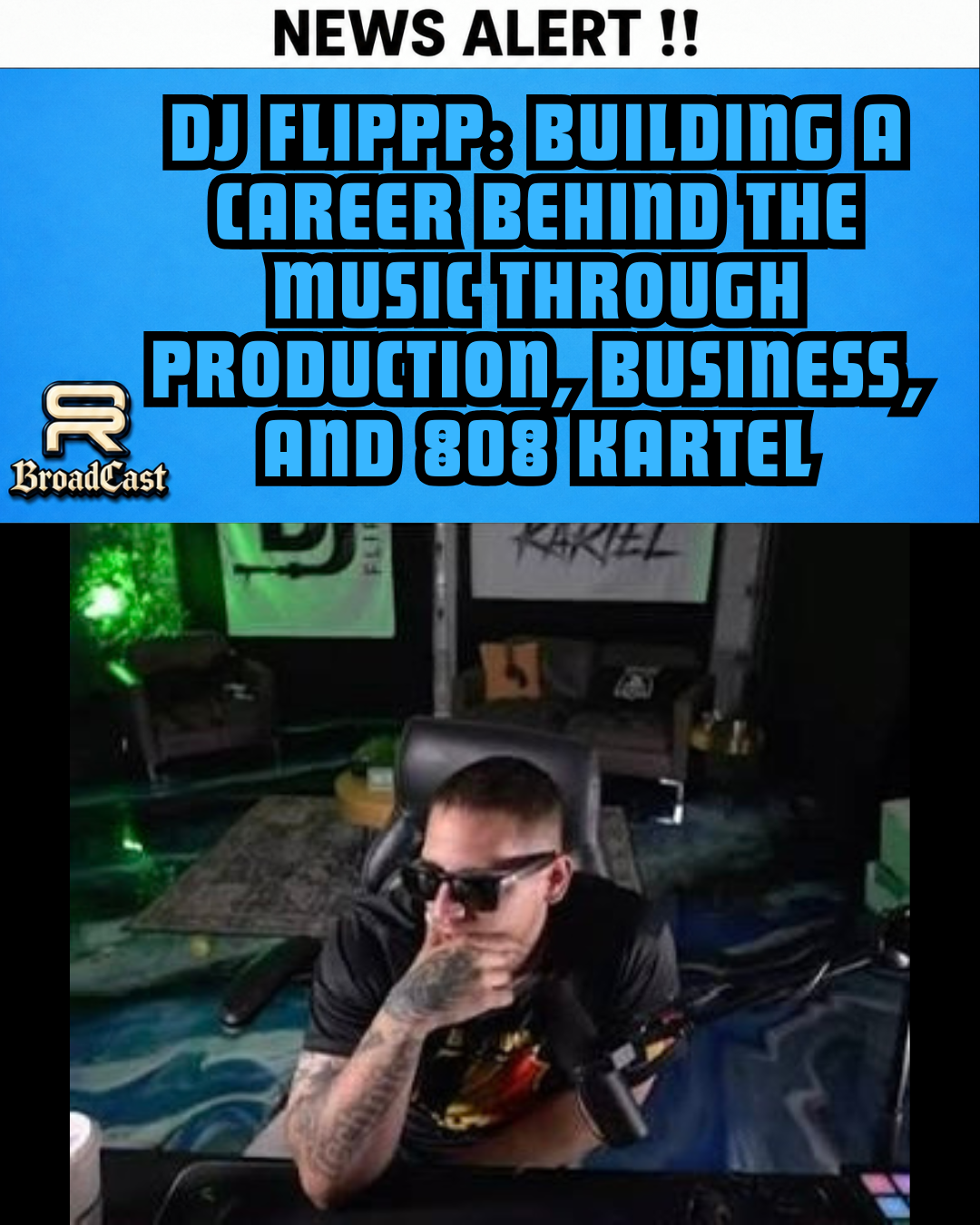
DJ FLIPPP: BUILDING A CAREER BEHIND THE MUSIC THROUGH PRODUCTION, BUSINESS, AND 808 KARTEL
Article written by SR Broadcast
Category: Business & Entrepreneurship
By SR Broadcast
The music industry is often viewed through the artists who stand in front of the microphone, but behind many successful records are producers and businesspeople whose work extends far beyond the recording process. For DJ Flippp, building a career in music has meant developing production skills, establishing industry relationships, and turning his experience into business ventures of his own.
As the CEO of 808 Kartel, DJ Flippp has established a presence in music production and studio operations, with credits connected to artists including Trippie Redd, Shoreline Mafia, Famous Dex, and UnoTheActivist. His professional production résumé also documents platinum and gold certifications associated with several releases. These accomplishments reflect a career built around the creative and commercial sides of recorded music.
EARLY EXPERIENCES AND THE MOVE INTO PRODUCTION
DJ Flippp’s path into the industry began before he became known for his production work. In a 2019 interview with Producergrind, he discussed growing up in Palmdale, California, DJing at clubs and house parties as a teenager, and eventually developing his skills as a beatmaker.
The transition from DJing to producing opened up another side of the music business. Rather than only playing music created by others, he began creating original material that artists could use in their own recordings. Selling beats online became part of that process, giving him a way to put his work in front of potential customers and generate income from his production.
That step is significant for independent creatives. Learning a craft is one challenge; finding people willing to pay for it is another. Producers must understand their market, develop a recognizable sound, and learn how to turn individual sales into consistent opportunities.
Flippp’s experience also highlights the importance of persistence in an industry where income and opportunities can fluctuate. His discussion with Producergrind touched on balancing music with other jobs and side hustles while working to advance his career.
DEVELOPING 808 KARTEL
One of the central parts of DJ Flippp’s business career is 808 Kartel, a production and studio operation built around creating music and working with recording artists.
The company’s official website describes its production capabilities and highlights credits involving a range of established hip-hop artists. Its work illustrates how a producer’s individual career can develop into a larger operation, creating room for studio services, collaborations, and other professional relationships.
Operating a studio-based business involves more than producing a strong beat. It requires equipment, a suitable working environment, client relationships, project coordination, and an understanding of what artists need to complete their recordings. A business must also establish a reputation that encourages people to return and recommend its services to others.
For producers looking to establish themselves independently, this model offers a different way to approach a career. Instead of relying exclusively on individual placements, they can work toward building a business with services and relationships that extend beyond a single song.
PRODUCTION CREDITS AND INDUSTRY RECOGNITION
DJ Flippp’s professional credits include work connected to Trippie Redd’s A Love Letter to You and releases associated with Shoreline Mafia. His published production résumé lists the former album as RIAA platinum-certified and identifies gold certifications for several additional releases, including Love Scars Pt. 2/Rack City and Perc Popper.
These credentials demonstrate the reach that production work can have when a record connects with a substantial audience. A producer’s contribution can continue reaching listeners long after a recording session ends, while a successful release can strengthen professional credibility and help create future opportunities.
However, recognition alone does not run a business. Producers still have to manage their work, maintain relationships, negotiate opportunities, and continue creating material that meets the needs of artists. The business side of music requires a different set of skills from the creative process, and long-term success often depends on developing both.
EXPANDING BEYOND ONE SOURCE OF INCOME
Another important aspect of Flippp’s career is the range of work discussed throughout his interviews. Alongside producing and selling beats, he has spoken about studio ownership, engineering, video work, and collaborating with other producers.
These activities reflect a broader approach to entrepreneurship: identifying related services that can support the same industry and customer base. An artist may need a beat, recording time, engineering, or visual content to bring a project together. For a creative business, understanding those needs can reveal opportunities to provide additional services.
Expanding in this way also comes with responsibilities. Every new service requires time, organization, and the ability to deliver quality work. Entrepreneurs must determine which opportunities make sense for their business rather than expanding simply because another source of income appears available.
For independent producers, developing several complementary skills can also create a better understanding of how music moves from an initial idea to a finished release. That knowledge can be valuable when working with artists, other producers, and professionals throughout the industry.
WHAT ASPIRING ENTREPRENEURS CAN LEARN
DJ Flippp’s career offers a practical example of how a creative skill can become the foundation for a business. His progression from teenage DJing and online beat sales to production credits and the development of 808 Kartel demonstrates the importance of building experience while looking for ways to turn that experience into professional opportunities.
His story also reflects challenges common to independent business owners: maintaining consistency, managing income, establishing connections, and continuing to improve while competing in a crowded market.
For aspiring entrepreneurs, the lesson is not that every producer will achieve platinum records or work with major artists. It is that a career can develop when people combine their abilities with an understanding of how their industry operates.
Building a sustainable business takes more than recognition. It requires learning how to provide value, creating reliable professional relationships, and developing a structure that allows the work to continue beyond individual opportunities.
Through his production career and leadership at 808 Kartel, DJ Flippp represents the business side of an industry that is often discussed primarily in terms of artists and releases. His experience demonstrates how the work behind the music can become its own enterprise, with creative ability serving as the starting point for a broader professional operation.