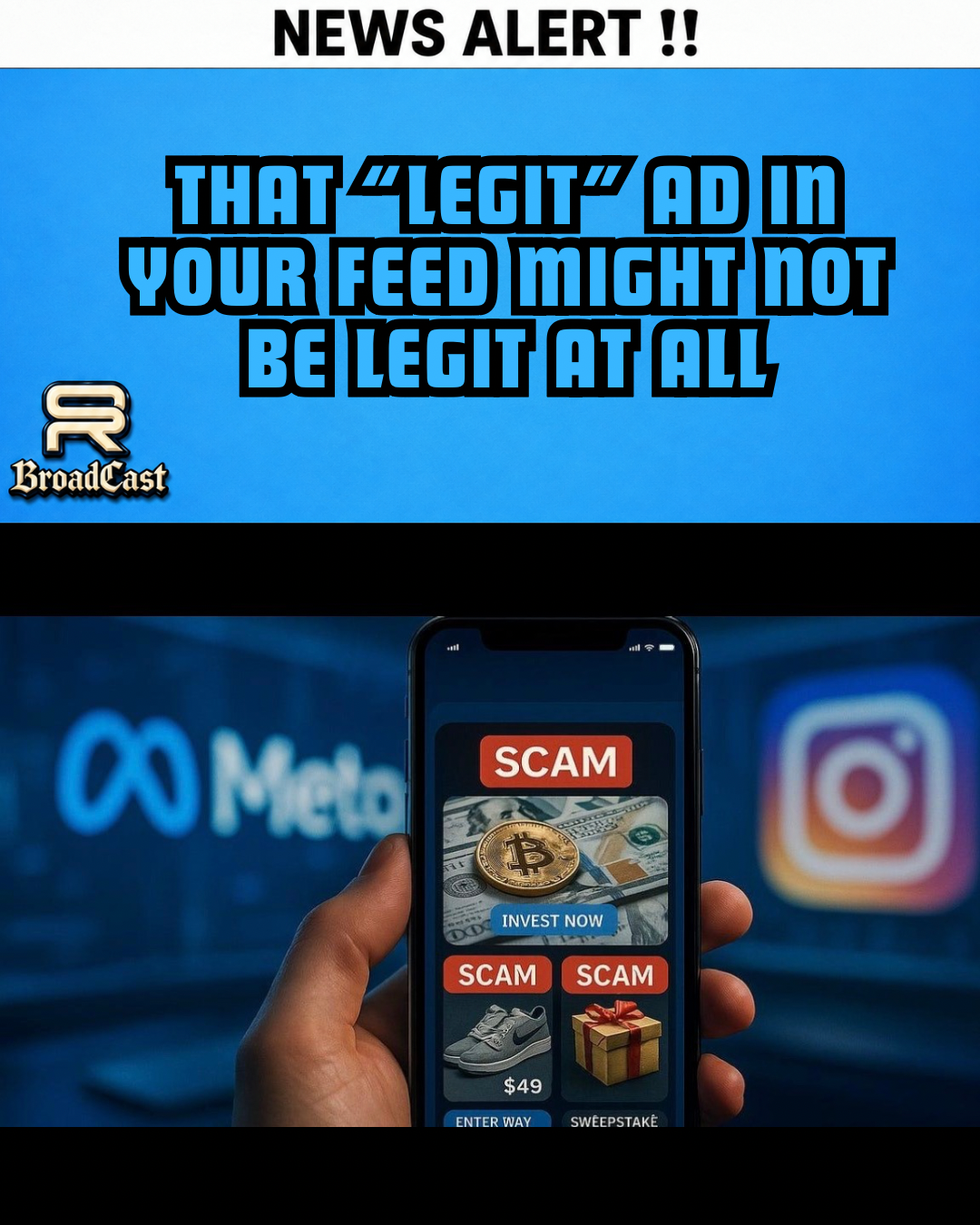
THAT “LEGIT” AD IN YOUR FEED MIGHT NOT BE LEGIT AT ALL By SR BroadCast
You know those ads that look almost too good to pass up? The ones that show up while you’re scrolling and make you stop for a second?
That “deal” might deserve more attention than just a quick tap.
The Federal Trade Commission is warning consumers about something a lot of people probably don’t think about: a sponsored ad showing up on your social-media feed doesn’t necessarily mean the company behind it has been verified by the platform.
A scammer can pay to get an advertisement in front of real people just like a legitimate business can.
And that’s what makes this different from the obvious scam posts most people already know to avoid.
We’re talking about advertisements that can look professional, use familiar branding, feature products you’ve actually heard of and show up right alongside the content you normally scroll through.
In other words, the scam doesn’t always look like a scam.
The FTC says consumers reported $2.1 billion in losses from scams that started on social media during 2025. Nearly 30% of people who reported losing money to scams said social media was where the scam started.
That’s a serious number — but the bigger story is how people are getting pulled in.
Imagine seeing a pair of $500 shoes advertised for $19.
You click.
The website looks clean. The pictures look real. There’s a countdown clock telling you the deal is almost over. Maybe there are even fake reviews showing hundreds of people supposedly buying the same product.
Nothing about that experience necessarily screams “SCAM.”
That’s exactly why these schemes can work.
A fake shopping advertisement could lead you to a site built to collect your payment information. A fake investment ad could push you toward sending money. Someone impersonating a real company, celebrity or government agency could use the advertisement to make the whole operation look legitimate.
And the FTC says consumers reported more than $95 million in losses during 2025 from scams that began after people ordered something from an ad they saw on social media.
Now regulators are asking a bigger question:
How much responsibility should social-media platforms have for the advertisements they’re helping put in front of their users?
In September, the FTC announced that it was looking at possible changes to its rules involving impersonation scams, including whether online platforms’ advertising systems can play a role when scammers pretend to be legitimate businesses or government agencies.
That doesn’t mean the FTC has declared every social-media platform responsible for scams.
It also doesn’t mean every sponsored advertisement is suspicious.
But it does raise a question worth paying attention to: when a platform can target an advertisement to exactly the kind of person a scammer wants to reach, should more be done before that ad gets approved?
For users, the safest move isn’t complicated.
Don’t confuse “Sponsored” with “Verified.”
Before buying something from an ad, search the company separately. Look for independent reviews. Search the company name alongside words like “scam” or “complaint.” And if it’s a company you already know, go directly to its official website instead of using the advertisement’s link.
Most importantly, don’t let a countdown clock, massive discount or limited-time message rush you into giving somebody your money.
Because sometimes the biggest red flag isn’t what the advertisement says.
It’s how badly it wants you to stop thinking and start clicking.
That’s the part worth remembering the next time an unbelievable deal pops up while you’re scrolling.
SR Broadcast - Music - Media - News - More